🌩️💻
Hi there, techies! 👋 Today, we’ll look at an interesting paper on the topic of interconnected cloud computing. Strap in, because we’re going to be flying high in the cloud! ☁️🚀
The Paper in Focus 📄
And so our itinerary starts with the article ‘Interconnected Cloud Computing Environments: Challenges, Taxonomy, and Survey’, published in ACM Computing Surveys in 2014 by Adel Nadjaran Toosi, Rodrigo N. Calheiros and Rajkumar Buyya. It is a true pearl of academic prose!
What’s the Big Deal? 🤔
So, why should any of this matter? Because our increasingly digital world isgravitating away from autonomous closed clouds towards an interconnected cloud
architecture. What holds true for baseball — with early, disconnected
innovations becoming the dominant model — could be playing out in technology.
Instead of a bunch of soloists, the game might be evolving into a more
coordinated team effort!
The Cloud Landscape 🏞️
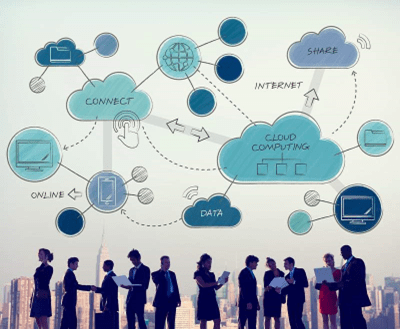
The paper begins by describing the new world of cloud computing and its various implementations: ‘We private clouds, community clouds, hybrid clouds – even different variations within these types of clouds.’ Each has its advantages, but ‘when we combine them, who knows what could happen?’ 🚀
Challenges on the Horizon ⚠️
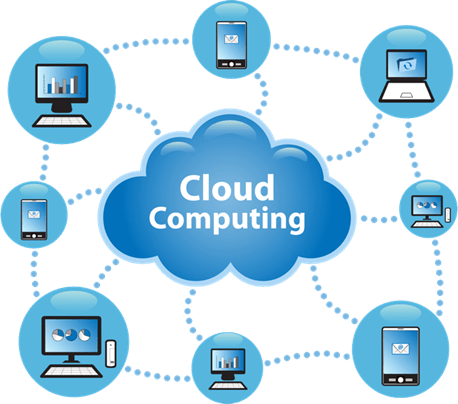
Sure enough, with great power comes great… problems. The authors don’t shy away from the problems we face in the interconnected cloud:
- Security and Privacy: How can you keep data safe as it floats through the cloud?
- Interoperability: Making sure different cloud systems can play nice together.
- Resource Management: Juggling resources across multiple clouds can be like a high-stakes game of Tetris.
- Networking: Ensuring smooth data highways between clouds.
A New Way of Thinking 🧠
In shifting some of the focus of cloud computing from the isolated tree to the forest gives us a new way to look at the world of web services!
Let’s get the interesting part here. The authors propose a tax interlinked cloud environment. They classify them into four major categories:
- Multi-Tier
2. Volunteer Federation
3. Peer-to-Peer
4. Centralized
All three are different: each has different properties, for different purposes!

The paper makes the transition from theory-land to the real world pretty smoothly; there’s a list of useful applications of the distributed computing cloud, where the nodes don’t share any secrets with each other, such as scientific supercomputing or business process management!
Why It Matters 🌟
This paper is a treasure-trove for anyone interested in the future of cloud computing. Not only does it identify the issues that lie ahead, it points to the way forward. You want to know what it means to be part of a more hyperconnected world. You, my friend, you need to read this.
Final Thoughts 💭
Although it was published in 2014, much of this paper remains just as relevant today. Its issues are ones that are discussed at the highest levels of industry, and its themes continue to be at the forefront of debates about where cloud computing will go next.
Fortunately, for interested readers, from beginner to expert in cloud computing, this paper provides a well-documented glimpse of the interconnected future of the digital realm. Keep your head in the clouds, but your feet firmly planted in the real world of research such as this! 😜☁️ 💬
Read the full paper here References
IBM. (n.d.). What is scientific computing? Retrieved August 21, 2024, from https://www.ibm.com/topics/scientific-computing
Microsoft Azure. (n.d.). What is public cloud? Retrieved August 21, 2024, from https://azure.microsoft.com/en-us/resources/cloud-computing-dictionary/what-is-public-cloud/
Techopedia. (n.d.). Interoperability. Retrieved August 21, 2024, from https://www.techopedia.com/definition/631/interoperability
Toosi, A. N., Calheiros, R. N., & Buyya, R. (2014). Interconnected cloud computing environments: challenges, taxonomy, and survey. ACM Computing Surveys, 47(1), 1–47. https://doi.org/10.1145/2593512
 InfoSys Insights
Leave a comment